Flood insurance before closing: compare coverage and effective dates
Separate flood-map research from insurance coverage and confirm the policy, quote assumptions and effective date for your purchase.

What matters before you decide
Check both the property’s flood information and the coverage you can actually obtain. Standard homeowners coverage generally excludes flood damage. NFIP policies usually have a 30-day waiting period, with exceptions: ask the provider to confirm the applicable start date in writing rather than assuming the closing date creates coverage.
- Save the effective map reference.
- Obtain a quote for the exact address.
- Compare building, contents and deductibles.
Keep the map, requirement and policy separate
Use FEMA’s Flood Map Service Center for the exact address and note the effective map and any available map changes. Ask the lender about its insurance requirement. Then ask an insurance professional for available coverage. A lender’s requirement and your assessment of potential loss are separate decisions; a location outside a mapped high-risk area does not establish that flooding cannot occur.
Keep an address-level folder with the map reference, seller’s flood history where available, inspection observations and the written quote. If the home has a basement or lower-level living area, ask what the proposed policy covers there. Do not translate the colored boundary on a map into a universal coverage promise.
Compare a policy on the same basis
The CFPB recommends investigating disaster risk and getting a quote for the home you plan to buy; the current owner’s flood premium may not be your premium. For each offer, list building coverage, contents coverage, deductibles, exclusions, payment terms and any documents still needed. Ask whether the lender accepts the proposed policy and distinguish a quote from an issued policy.
Confirm the effective date before relying on coverage
FloodSmart describes a usual 30-day NFIP waiting period and exceptions, including some mortgage-related purchases. Do not decide eligibility for an exception from a general article. Give the provider the actual transaction dates and ask it to confirm the rule, required payment and coverage effective date. Keep the confirmation with the closing checklist.
If the purchase or policy timing changes, revisit the start date. Ask separately about transfer arrangements where an existing policy is involved. A seller’s declaration that the home is insured does not confirm that your interest, possessions or period of ownership will be covered.
Decision checklist
- Save the effective map reference.
- Obtain a quote for the exact address.
- Compare building, contents and deductibles.
- Confirm start date and any waiting-period exception.
Frequently asked questions
01Does homeowners insurance include flood coverage?
Usually it does not. Review the actual policy and ask about separate flood insurance.
02Does a closing automatically remove the NFIP waiting period?
Do not assume it does. The provider must confirm whether the actual transaction qualifies for an exception and when coverage takes effect.
Primary sources and further reading
Always verify the date, scope and local application before using a source for a specific decision.
Independent educational information. Not legal, tax, lending, or investment advice. Verify local rules and consult licensed professionals before making a real estate decision.
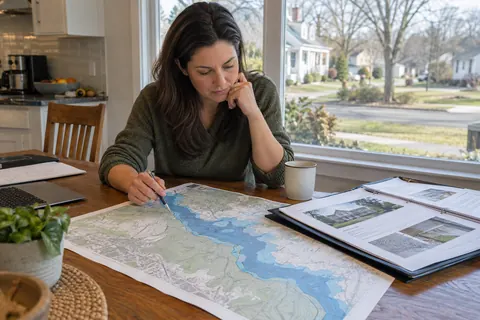
How to read flood maps before buying a home
Use FEMA maps as a starting point, then check the exact building, insurance quote, drainage and local flood history before an offer deadline.
Read the file
Climate risk and home insurance: address-level due diligence
Combine official hazard layers, site observations, building resilience and comparable insurance quotes before treating a home as affordable.
Read the file
Property insurance claims history: what to ask before buying
Connect seller disclosures, claim records, repair evidence and an address-specific insurance quote before closing.
Read the file